Research and videos
HRT (estradiol): the research and Kevin's videos
Does HRT protect my APOE4 brain, and is it too late to start years after menopause?
No Phoenix member data yet
This page has no results from Phoenix members yet. It shows what published research says, and what Kevin and the experts say in his videos.
See what Phoenix members have measuredDoes HRT protect my APOE4 brain, and is it too late to start years after menopause?
Hormone therapy started near menopause probably neither raises nor lowers dementia risk: large reviews and two trials found no effect on thinking either way. Starting older combined pills after 65 raised dementia risk in one big trial, and APOE4-specific benefits come only from observational studies. HRT clearly treats hot flashes and night sweats and probably improves sleep; whether and how to use it is a decision to make with your doctor.
What the research says
Grade BAPOE4-specific evidence: limited
Started near menopause, hormone therapy probably does not change dementia risk; started late with older combined pills it raised risk in one large trial, and the hints of extra benefit for APOE4 women come from observational data only.
Key studies
Melville 2025, Lancet Healthy LongevityGrade B
Systematic review and meta-analysis (over a million women): no clear link between hormone therapy and MCI or dementia either way.
Read on PubMed (opens in a new tab)Shumaker 2003, JAMA (WHIMS)Grade B
Randomised trial in women 65 and older: oral conjugated estrogen plus medroxyprogesterone raised dementia risk.
Read on PubMed (opens in a new tab)Gleason 2024, PLoS Medicine (KEEPS Continuation)Grade B
About four years of hormone therapy soon after menopause left no lasting cognitive benefit or harm a decade later.
Read on PubMed (opens in a new tab)
6 more key studies
Gleason 2015, PLoS Medicine (KEEPS-Cog)Grade B
Randomised trial in recently menopausal women: no cognitive benefit or harm; oral estrogen improved mood.
Read on PubMed (opens in a new tab)Nerattini 2023, Frontiers in Aging NeuroscienceGrade B
Meta-analysis: trials in women 65+ show higher dementia risk with combined therapy; observational studies link midlife estrogen-only use to lower risk.
Read on PubMed (opens in a new tab)Whitmer 2011, Annals of Neurology
Cohort: hormone use only in midlife went with 26% less dementia, use only in late life with 48% more.
Read on PubMed (opens in a new tab)Pourhadi 2023, BMJ
Danish nationwide case-control study: estrogen-progestogen use linked to higher dementia rates, even when started at 55 or younger.
Read on PubMed (opens in a new tab)Saleh 2023, Alzheimer's Research & Therapy (EPAD)Grade C
Cohort: APOE4 women using HRT had better delayed memory and larger memory-region volumes.
Read on PubMed (opens in a new tab)Collaborative Group 2019, LancetGrade B
Pooled worldwide data: most systemic hormone therapy types raise breast cancer risk, more with longer use; vaginal estrogen showed little or no increase.
Read on PubMed (opens in a new tab)
What Kevin and experts say
2 passages for, 6 with a caution, 4 also discussed
Now showing: Steve Goldring · 16:27
Open on YouTube (opens in a new tab)For2 passages
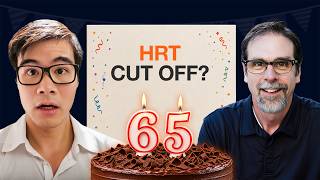
Early HRT protects heart, metabolism and bones; brain benefit less certain.
“I'm talking about cardiovascular disease, metabolic disease, osteoporosis, and then possibly Alzheimer's.”
Steve Goldring, Menopause hormone educator (Simple Hormones), 30+ years in compounding pharmacy

HRT linked to better memory in APOE4 women.
“women with [APOE4] who use hormone replacement therapy had the highest delayed memory scores”
Dr. Kevin Tran, Founder of The Phoenix Community, Doctor of Pharmacy, APOE4/4 carrier
With a caution6 passages
Never too late, but check your heart risk first.
“it's never really too late for a woman to take hormones”
Steve Goldring, Menopause hormone educator (Simple Hormones), 30+ years in compounding pharmacy

If considering HRT, earlier is almost certainly better than later.
“if you are going to consider HRT, earlier is almost certainly better than later. And the worst time to start is a decade or more after menopause.”
Dr. Kevin Tran, Founder of The Phoenix Community, Doctor of Pharmacy, APOE4/4 carrier

Starting HRT after 65 may no longer help the brain.
“if you're doing it after 65, for example, maybe the window of opportunity is not there because to ask that [65-year-old] brain, it's moved on.”
Dr. Ashanthi Gajaweera, Board-certified neurologist, Menopause Society certified practitioner (Healthspan Neurology)

Starting HRT very late may raise dementia risk.
“There's some data indicating that this is something where it's likely to increase your rate of dementia.”
Dr. Grant Fraser, Board-certified anti-aging and family medicine physician, APOE4 carrier

No study yet, but the first years after menopause are seen as prime.
Dr. Ashanthi Gajaweera
Watch the Short on YouTube (opens in a new tab)
In one cohort, midlife HRT use went with less dementia and late-life use with more.
Dr. Kevin Tran
Watch the Short on YouTube (opens in a new tab)Newer research: a 2025 review of over a million women found no link between hormone therapy and dementia, whatever the starting age or timing.
Read the study (opens in a new tab)
Also discussed4 passages
The strictest review found no effect either way.
“no significant association between menopause hormone therapy and risk of mild cognitive impairment or dementia.”
Dr. Kevin Tran, Founder of The Phoenix Community, Doctor of Pharmacy, APOE4/4 carrier
The 26% breast cancer headline means 8 extra cases per 10,000 women yearly.
“absolute risk increase was 0.08% or eight women out of 10,000 in a year.”
Steve Goldring, Menopause hormone educator (Simple Hormones), 30+ years in compounding pharmacy
Oral estradiol has a small clot risk, not a ban.
Steve Goldring
Watch the Short on YouTube (opens in a new tab)WHI fears were wrongly applied to younger women.
Dr. Kevin Tran
Watch the Short on YouTube (opens in a new tab)
Last reviewed
The Beat the Odds Study
The 43-page study: what members tried, how their bloodwork and wearable results changed, and what else changed alongside them.
Turn evidence into your next test
I built this so nobody has to be the first to try something.
476 members have already tried, measured and logged. Join Phoenix and your next blood draw joins the same Navigator you are reading.
Full research index
Find a goal, marker, intervention or question
Choose an outcome, like LDL cholesterol or sleep, or an intervention, like training: both paths open the same measured records.