Research and videos
Anti-amyloid antibodies (lecanemab, donanemab): the research and Kevin's videos
Are lecanemab or donanemab worth it for APOE4 carriers, given the risk of brain swelling and bleeding?
No Phoenix member data yet
This page has no results from Phoenix members yet. It shows what published research says, and what Kevin and the experts say in his videos.
See what Phoenix members have measuredAre lecanemab or donanemab worth it for APOE4 carriers, given the risk of brain swelling and bleeding?
In two large trials these infusions slowed decline in early Alzheimer's, but by a small amount that a 2026 Cochrane review judged trivial to small. They raise the risk of brain swelling and microbleeds (ARIA), most for people with two copies of APOE4. They are treatments for people who already have early symptoms, not prevention.
What the research says
Grade AAPOE4-specific evidence: limited
Anti-amyloid antibodies clear amyloid and modestly slow decline in early Alzheimer's, but the benefit is small and ARIA risk is clearly higher, especially in APOE4/4 carriers.
Key studies
van Dyck 2023, NEJM (Clarity AD)Grade A
Lecanemab slowed CDR-SB decline by 0.45 points over 18 months; ARIA with swelling in 12.6%.
Read on PubMed (opens in a new tab)Sims 2023, JAMA (TRAILBLAZER-ALZ 2)Grade A
Donanemab slowed decline on iADRS and CDR-SB over 76 weeks in early Alzheimer's.
Read on PubMed (opens in a new tab)Nonino 2026, CochraneGrade A
Effect on cognition and dementia severity at 18 months is trivial and on function small at best; ARIA risk rises.
Read on PubMed (opens in a new tab)
1 more key study
Hsu 2025, Journal of Prevention of Alzheimer's DiseaseGrade A
Meta-analysis: benefit did not reach the minimal important difference; APOE4 homozygotes had about 5.5 times the odds of ARIA with swelling.
Read on PubMed (opens in a new tab)
What Kevin and experts say
3 passages for, 3 with a caution, 2 also discussed
Now showing: Dr. Gayatri Devi · 24:08
Open on YouTube (opens in a new tab)For3 passages

She is most proactive for 4/4 carriers in their 50s with amyloid.
“if someone's in their 50s, they have two copies of the four and they have amyloid load, I'm probably the most proactive in those situations.”
Dr. Gayatri Devi, Neurologist, Park Avenue Neurology; Clinical Professor, Zucker School of Medicine at Hofstra/Northwell
She raises anti-amyloid doses very slowly instead of starting high.
“why do you need to go in all guns blazing at the high doses when you have this amyloid being deposited over decades? I can titrate.”
Dr. Gayatri Devi, Neurologist, Park Avenue Neurology; Clinical Professor, Zucker School of Medicine at Hofstra/Northwell
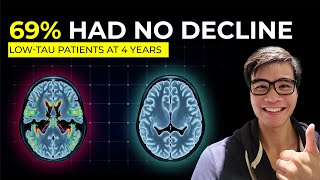
Kevin weighs ARIA as manageable against carriers' high risk.
“So this is a manageable timelimited risk for potentially life-changing benefits”
Dr. Kevin Tran, Founder of The Phoenix Community, Doctor of Pharmacy, APOE4/4 carrier
Newer research: a 2026 Cochrane review found amyloid antibodies probably make little to no difference to cognition at 18 months.
Read the study (opens in a new tab)
With a caution3 passages
Treating early is her view, not proven or official.
“it's not the official position and it's not a position that has proven results from clinical phase three trials.”
Dr. Gayatri Devi, Neurologist, Park Avenue Neurology; Clinical Professor, Zucker School of Medicine at Hofstra/Northwell

Kevin suggests trying structured lifestyle changes before deciding on amyloid drugs.
“maybe it makes way more sense to test those structured lifestyle changes first”
Dr. Kevin Tran, Founder of The Phoenix Community, Doctor of Pharmacy, APOE4/4 carrier

Antibody drugs help carriers less and carry ARIA risk.
“in current [monoclonal antibody] treatments ApoE4 carriers don't have the same effects and also they're prone to [ARIA].”
Dr. Cheng Fang, Annovis Bio, buntanetap research (AD/PD 2025 conference clip)
Also discussed2 passages
Current infusions slow decline only a little and carry bleeding risk for carriers.
“aren't aren't great drugs and have some significant side effects and also increased rate of, you know, hemorrhage in people that have APOE4s”
Dr. Grant Fraser, Board-certified anti-aging and family medicine physician, APOE4 carrier
Infusions slow decline about 20-35% in the right patients, but are burdensome.
“They basically slow decline by you know 20 to 35% in the right patient population.”
Dr. Kevin Tran, Founder of The Phoenix Community, Doctor of Pharmacy, APOE4/4 carrier
Last reviewed
The Beat the Odds Study
The 43-page study: what members tried, how their bloodwork and wearable results changed, and what else changed alongside them.
Turn evidence into your next test
I built this so nobody has to be the first to try something.
476 members have already tried, measured and logged. Join Phoenix and your next blood draw joins the same Navigator you are reading.
Full research index
Find a goal, marker, intervention or question
Choose an outcome, like LDL cholesterol or sleep, or an intervention, like training: both paths open the same measured records.