Free guide · For APOE4 carriers
Your blood test is lying to you.
Your doctor says your bloodwork is “normal.” It’s not. “Normal” only means average. And the average American is inflamed and insulin resistant. The same thresholds matter more when your baseline risk is higher. This free Blueprint gives you practical targets, the research behind them, and the questions to take to your doctor.
The PDF lands in your inbox in seconds. No spam, only the APOE4 research you’d actually want to hear about.
<60
Optimal <60 · “Normal” up to 125 mg/dL
15 pages · version 2.0
The two problems with “normal”
“Normal” doesn’t mean optimal. It means average.
Most lab ranges come from the middle 95% of people a lab considers “healthy.” As the population gets sicker, the “normal” range drifts with it. And even if it didn’t, APOE4 carriers aren’t like everyone else.
- The 95% problem
Average is sick
Standard ranges are built around the average patient: overweight, inflamed, and insulin resistant. “Within range” can still be nowhere near where your brain needs you to be.
- The APOE4 problem
The same threshold. Higher stakes.
APOE4 affects lipid metabolism and inflammatory responses. Most markers have no separate carrier-specific target in the research. Our higher baseline risk makes acting on the same numbers more valuable.
Know which target you are using.
The guide uses under 60 mg/dL as an aspirational target to discuss with your clinician. It draws on very-high-risk cardiovascular guidance, not an APOE genotype split. Source: National Lipid Association, 2024.
What’s inside
Six systems. One protocol.
30+ biomarkers with Phoenix discussion targets, clear research context, and a column for your own value.
- 01
Cardiovascular & lipid
7 markersApoB, LDL-P, Lp(a) and the aggressive lipid targets that protect the APOE4 brain.
- 02
Glucose & metabolic
5 markersFasting insulin, HbA1c, HOMA-IR, and why APOE4 traps insulin receptors.
- 03
Inflammation & immune
4 markershs-CRP, ESR, fibrinogen and IL-6. Carriers with repeatedly high CRP had 4.7× the Alzheimer’s risk of carriers without it. Study
- 04
B-vitamins & thyroid
9 markersB12, folate, homocysteine below 8, and thyroid results to discuss with your doctor.
- 05
Iron metabolism
5 markersFerritin and iron, with the distinction between blood ferritin and the spinal-fluid research made clear.
- 06
Advanced biomarkers
4 markersp-tau217, GFAP, NfL, Aβ42/40: the earliest plasma signals of AD pathology.
Plus a traffic-light system
Find your highest-priority numbers in seconds.
| Marker | Optimal | Monitor | Action |
|---|---|---|---|
| hs-CRP | < 0.5 mg/L | 0.5 – 2.0 | > 2.0 |
| HbA1c | < 5.3% | 5.3 to < 5.7% | ≥ 5.7% |
| Homocysteine | < 8 µmol/L | 8 – 11 | > 11 |
| LDL-C | < 70 mg/dL | 70 – 100 | > 100 |
| Fasting insulin | < 6 µIU/mL | 6 – 12 | > 12 |
| Omega-3 Index | > 8% | 4 – 8% | < 4% |
Your information is legitimate. There’s a lot out there. People have all kinds of weird websites. Your stuff is real.Donna Dorans · APOE4/4 · 10 years since diagnosisWatch Donna’s full story

Why I built this
“I carry APOE4/4. I built this guide because I needed to know which numbers to watch and what to ask my doctor. The same thresholds matter more when the stakes are higher. I want you to have a clear starting point too.”
Dr. Kevin Tran · Doctor of Pharmacy · APOE4/4 carrier · Founder
Read my storyFrom numbers to action
Knowing your numbers is 10% of the battle.
The real question is what you do to fix them. Phoenix shows which interventions were followed by better outcomes in carriers who share your genetics and profile, while keeping your own full intervention record beside every retest.
Smart Blood Analyzer
Upload labs and get APOE4-specific insights across 150+ biomarkers (27 of them APOE4-critical) with trends tracked automatically.
Personalized interventions
Supplements, dosages, and protocols matched to your profile, based on members with biomarkers like yours.
Structured experiments
Record every intervention, measure before and after, and retest at the right interval. Phoenix is building pooled analysis to help separate what is helping from what is not.
People who get it
Hundreds of APOE4 carriers sharing protocols and results, plus accountability pods to keep you consistent.
Common questions
Frequently asked questions.
Why does "normal" on my lab report not mean optimal for APOE4?
Standard lab ranges are built around the middle 95% of people a lab considers healthy, which as the population gets sicker drifts toward "average," not "optimal." APOE4 carriers also have different lipid metabolism, inflammatory responses, and oxidative-stress patterns than the general population the ranges are built from.
What biomarkers does the Blueprint cover?
30+ biomarkers across 6 systems: cardiovascular and lipid, glucose and metabolic, inflammation and immune, B-vitamins and thyroid, iron metabolism, and advanced biomarkers like p-tau217, GFAP, NfL, and Aβ42/40.
What is the traffic-light scoring system?
Key markers get a green (optimal), yellow (monitor), or red (discuss action) band against Phoenix optimization targets. Action means a conversation with your clinician, not an emergency. Vitamin D uses a 30-100 ng/mL target; homocysteine uses below 8 optimal, 8-11 monitor, and above 11 discuss action.
Are the APOE4 target ranges official medical guidelines?
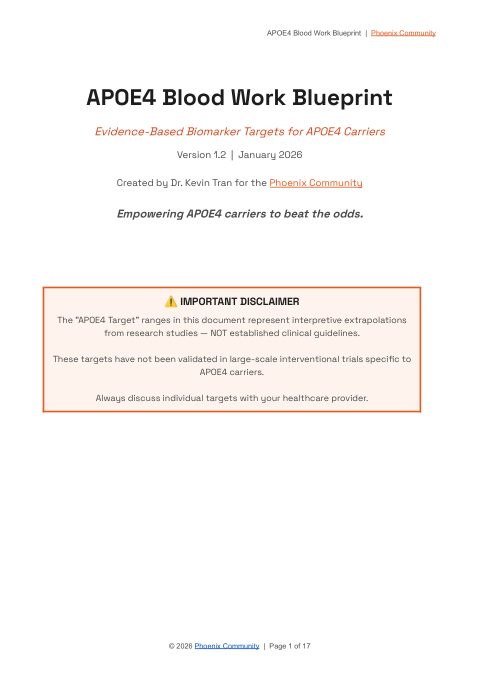
No. They are interpretive extrapolations from published research, not established clinical guidelines, and they have not been validated in large-scale trials specific to APOE4 carriers. Always discuss your individual targets with your healthcare provider.
Is the Blood Work Blueprint really free?
Yes. The full PDF downloads instantly after you enter your email. No payment, no trial, no credit card.
Get the free guide
Stop guessing. Get your targets.
Enter your email to download the APOE4 Blood Work Blueprint instantly, plus the research and member experiments we publish each week.
Straight to your inbox. No spam, only APOE4 research worth your time, and you can leave with one click.
The “APOE4 target” ranges in this guide are interpretive extrapolations from research, not established clinical guidelines, and not validated in large-scale trials specific to APOE4 carriers. Always discuss your individual targets with your healthcare provider.
Bloodwork & biomarkers
More free guides.
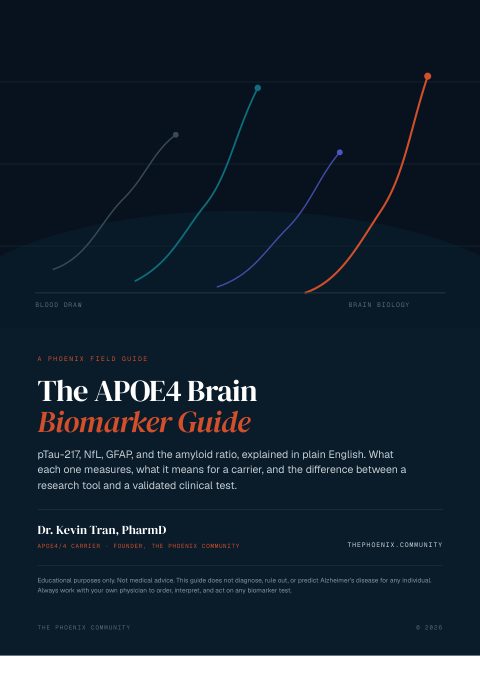 The APOE4 Brain Biomarker GuideUnderstand what brain-related blood tests can and cannot tell you.
 The APOE4 Lipid PlaybookUnderstand cholesterol markers and questions about treatment.
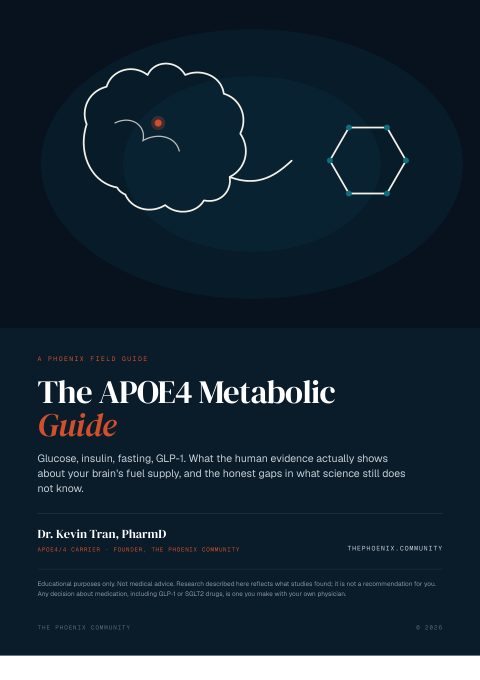 The APOE4 Metabolic GuideExplore glucose, insulin, fasting and metabolic treatments.
Phoenix APOE4 ResearchClinical trial engineAPOE4 doctor directory