Bedtime timing signal
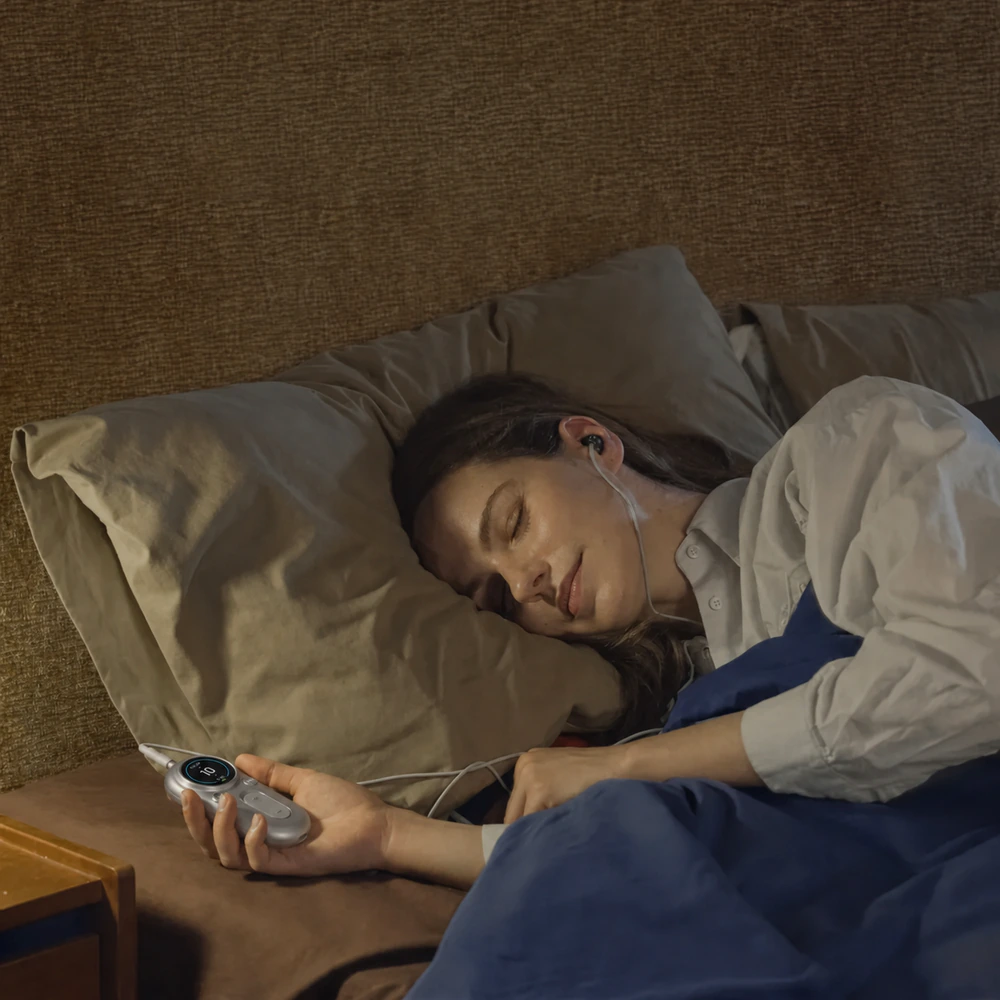
One member moved her session closer to bedtime and reported that the routine fit sleep more naturally.
 Phoenix x ZenoWell
What happened when 31 APOE4 carriers used gentle taVNS?
ZenoWell Luna uses ear-based vagus nerve stimulation, formally transcutaneous auricular vagus nerve stimulation (taVNS). Explore what started to show across 656 logged use days, then unlock the complete Phoenix research report.
Complete study report
The full member protocol, the detailed data tables, every limitation, and the exact study Phoenix will run next.
Early observational signals. Individual experiences. Not proof of efficacy or causation.
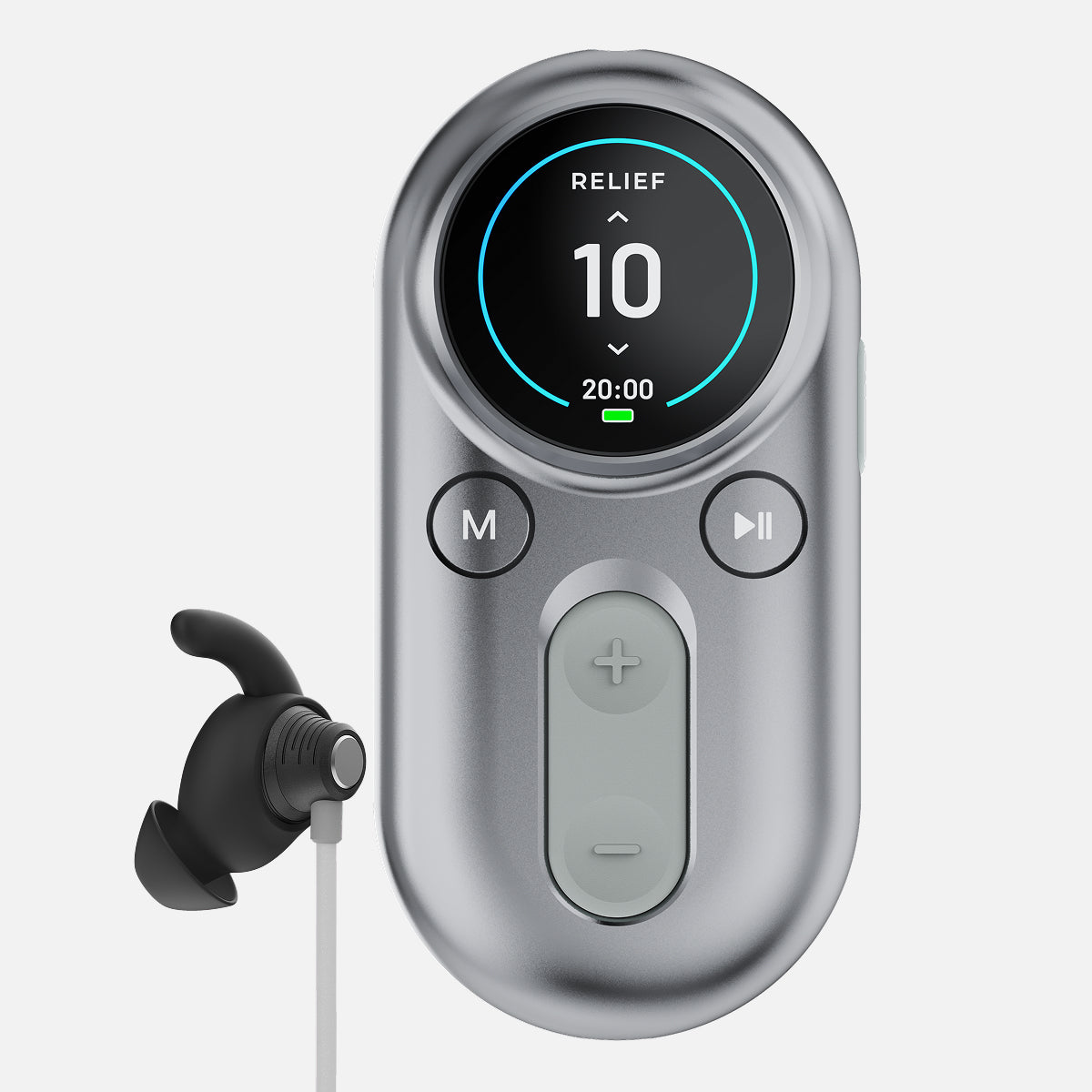
The rounded silver ZenoWell Luna used for ear-based stimulation.
These are traceable members who explicitly logged ZenoWell use, not anonymous impressions detached from a protocol.
Each explicitly logged ZenoWell use.
A substantial real-world exposure trail.
Not just one-off experiments.
23 of 31 members logged at least 10 use days.
At least 10 days: 23 of 31 (74%)
At least 20 days: 17 of 31 (55%)
At least 28 days: 8 of 31 (26%)
Phoenix compared each eligible member with themselves and gave each person equal weight. Members needed at least five explicit use nights and five explicit non-use nights.
The strongest self-reported signal was energy, followed by wellbeing and sleep.
Calm moved slightly negative at -0.08, an important reminder that the pattern was mixed, not universally positive.
average within-person difference
8 of 10 members leaned positive
7 of 10 members leaned positive
nearly flat
no positive signal
Points on the Phoenix 0-10 daily check-in scale. All confidence intervals included no effect.
Sleep score and HRV moved positive in small paired subsets, while total sleep and resting heart rate stayed flat. Paired wearable subsets ranged from n=6 to n=9. All confidence intervals included no effect.
A small, consistent directional signal in same-person comparisons.
A promising physiological direction, still too small to treat as a settled effect.
Paired wearable subsets: n=6 to n=9
Total sleep time: about five minutes lower, effectively flat.
Resting heart rate: flat.
Sleep-stage data were too sparse for a confident group claim. A real research engine keeps the nulls visible.
Individual experiences are not group-level proof. They are high-value clues about timing, comfort, and which outcomes deserve a better test.
Bedtime timing signal
One member moved her session closer to bedtime and reported that the routine fit sleep more naturally.
Sleep-onset signal
One member described easier sleep onset during the study window.
Subjective and wearable data can differ
One member felt better even while her wearable trend stayed flat, a useful reminder to keep both data streams.
One-person lead, not a conclusion
One person's experience suggested a timing question worth testing with a cleaner baseline and a planned schedule.
Phoenix compared each member's reported use nights with their own non-use nights. The main paired analysis required five explicit use nights and five explicit non-use nights, and each eligible person counted once.
The field notes beside it show how members refined timing, contact, comfort, and safety details for a stronger next study.
“I’m Kevin, a Doctor of Pharmacy and an APOE4/4 carrier, and I ran these same-person comparisons myself. I’m showing you the flat and null results next to the positive ones, because early signals are only worth anything when you can see what didn’t move.”
— Kevin Tran, Doctor of Pharmacy · APOE4/4 carrier
Water or conductive gel can support contact. If water dries too quickly, gel may help maintain a consistent connection.
Removing the black silicone cover when fit allowed made stimulation stronger and more comfortable for some members.
Follow the Luna manual and listed contraindications before use. Stop for pain, irritation, dizziness, or other discomfort.
Begin where stimulation is barely perceptible, then increase only as comfortable.
The routine appeared easier to sustain when it followed the body, not the clock.
Members discovered this sequence through use on high-stress evenings, not from the manual.
708+ active APOE4 carriers
Phoenix combines the questions carriers care about with the longitudinal data needed to find early signals, interpret them honestly, and design the next test.
Phoenix is building the largest carrier-led APOE4 research platform.
daily check-ins
HRV observations
sleep observations
blood measurements
Carriers try an intervention.
Phoenix connects their real-world data.
Early signals and individual stories emerge.
The community improves the protocol.
The next study starts with a sharper question.
More members and more partners make each cycle stronger.
Research run by APOE4 carriers, for APOE4 carriers.
This is why Phoenix is building carrier-led research infrastructure: every exploratory study can make the next protocol more focused, more useful, and easier for a partner to run.
Connect wearables before the first device night.
Capture a fixed 14-day baseline.
Name sleep onset, sleep score, wellbeing, and HRV as the outcomes.
Use a randomized crossover or planned on/off schedule.
Record discomfort and adverse events in a structured form.
Separate device mode and intensity.
Follow members long enough to see whether the signal strengthens, fades, or depends on continued use.
The signal is useful because the boundaries are visible.
708+ active APOE4 carriers are helping Phoenix turn shared questions into stronger next studies.
Complete study report
The full member protocol, the detailed data tables, every limitation, and the exact study Phoenix will run next.
Twenty-three of 31 members logged at least 10 use days.
Sleep onset appeared repeatedly in member stories.
Wellbeing, energy, and sleep quality leaned positive after use nights among 10 eligible members.
Wearable sleep score and HRV moved positively for a majority of eligible members: 5 of 6 and 6 of 9.
The community discovered a better real-world protocol for the next study.
More members. More partners. Better questions. Stronger evidence with every cycle.
The ZenoWell Luna is the rounded silver, ear-based device Phoenix members used in this study. It delivers gentle transcutaneous auricular vagus nerve stimulation (taVNS) in short sessions, usually before bed.
Want to try the ZenoWell Luna? Phoenix readers can save 20% with code APOE4.
Phoenix may receive a commission if you purchase through this link.
This page describes observational member data and individual experiences. It does not establish that ZenoWell caused any outcome. It is not medical advice, diagnosis, or treatment. Consult a qualified physician before changing any health protocol.