The brain helmet we put through a four-month study.
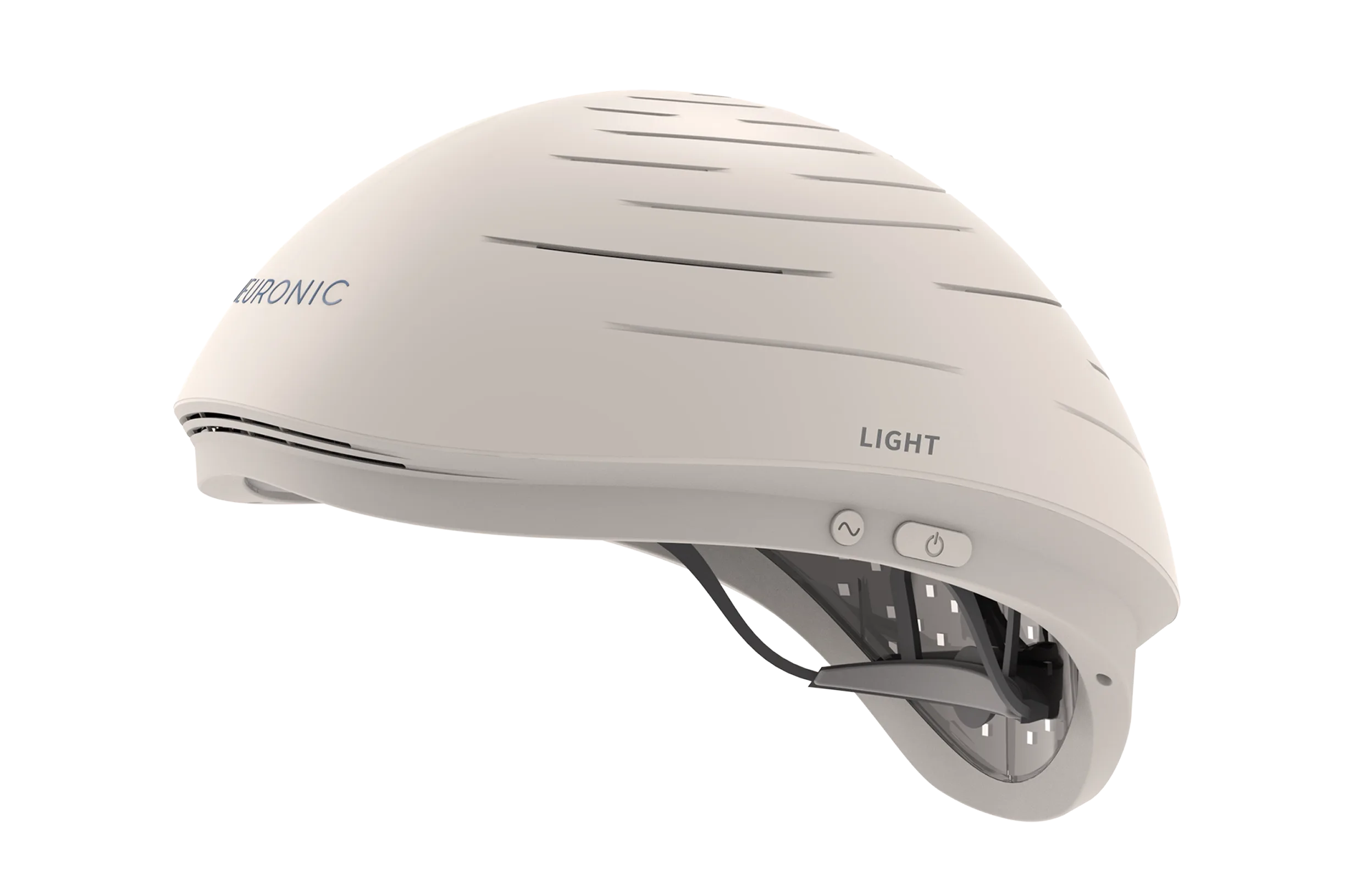
The Neuronic Light sends gentle near-infrared light into the brain. We tested it on APOE4 carriers inside Phoenix for four months. Memory improved. Sleep improved. The data is right below, and there’s $100 off if you want one.
Apply code PHOENIX at checkout for $100 off.
90-night home trial · up to a full money-back refund.
Complete study report
Unlock the complete study report
The 15-slide deck with every result, method, and limitation from our four-month APOE4 study.
- FDA-listed device
- 6,000+ users worldwide
- 300+ clinicians recommend
- 90-night home trial
Phoenix × Neuronic · the study
We didn’t just partner with Neuronic. We studied it.
Four months. APOE4 carriers (64% with two copies of the gene, the highest risk there is). Cognition, sleep, bloodwork and daily check-ins, all tracked continuously inside the Phoenix platform. Here is what the data showed.
Memory led the way
Change across five thinking skills (CogniFit, 25 participants). Memory is the area most tied to early Alzheimer’s risk, and it was the clear winner.
Four individual skills passed the strict bar on their own: Naming, Non-verbal memory, Visual perception, Working memory.
On session days, sleep improved
One participant, tracked night after night for months. Every metric moved the right way (all p < .01).
Gains built up over weeks (sleep at week 4, readiness by week 2), the slow, steady pattern you’d expect from a real response. Insomnia symptoms eased too (median −2.5 on the ISI).
One participant · inflammation
IL-6, a key inflammatory marker, fell more than 75% over about three months. The direction you hope to see.
Another participant · cognition
A 5.7-point gain on the ADAS-Cog13, a standard Alzheimer’s assessment where lower is better. A meaningful individual result.
Read honestly: this was a first, real-world study, small, with no placebo group, and the strongest sleep findings come from a single participant. We see a real signal worth scaling, not final proof. The next, larger study is already being designed.
Complete study report
Unlock the complete study report
The 15-slide deck with every result, method, and limitation from our four-month APOE4 study.
Watch the results
The full results, run exclusively with the Phoenix community.
How it works
Light, where your brain can use it
1070nm near-infrared light
Invisible, gentle infrared light at a wavelength chosen to pass through the scalp and skull and reach brain tissue, far deeper than visible light can go.
Energy for tired neurons
That light is absorbed by mitochondria, the tiny power plants inside your cells. The process is called photobiomodulation. The aim: help brain cells make energy more efficiently.
A few minutes a day
You wear the Neuronic Light like a helmet for a short session, set intensity and pulse in the app, and get on with your day. That is the whole protocol.
The offer
Get the Neuronic Light for $100 off

Neuronic Light
The portable 1070nm helmet used in our study.
- Neuronic Light, the portable 1070nm photobiomodulation helmet
- The exact device used in the Phoenix x Neuronic study
- Smartphone app to set time, intensity, and pulse
- External battery, light enough for daily at-home use
- Free 30-minute onboarding consultation
- 90-night home trial, up to a full refund if it is not for you
Use code PHOENIX at checkout on neuronic.com for $100 off.
FDA-listed · HSA/FSA eligible · 90-night home trial.
From Kevin
Why we tested Neuronic ourselves
Members kept asking me the same thing: does the light-therapy helmet actually do anything, or is it expensive hope?
I did not want to guess. So instead of slapping an affiliate link on it, we ran a study. Four months, real APOE4 carriers, real bloodwork and sleep and cognition, all tracked inside Phoenix.
The results were not a miracle, and I would not trust anyone who told you they were. They were something better: a real, measurable signal. Memory moved. Sleep moved. People felt steady for four straight months. That is enough to take it seriously, and enough to design a bigger, tighter study next.
Neuronic earned the recommendation the hard way, with data. That is the only way anything earns a spot in front of this community.
This study only happened because members track their own data.
Phoenix is the platform that turned scattered sleep, bloodwork and cognition into a real study, for APOE4 carriers, built by an APOE4/4 carrier. Join us and you’re not just reading the next result. You’re in it.
Explore PhoenixFrequently asked
Give your brain the light it was studied with.
The Neuronic Light, $100 off with code PHOENIX. 90-night home trial, so the only risk is not trying it.
Get $100 off with code PHOENIXUse code PHOENIX at checkout.
Phoenix is an independent partner of Neuronic and may earn an affiliate commission on purchases made through this page; commissions do not influence our partner selection or the study findings reported here. The results above describe an early, real-world, single-cohort observation, some of it from a single participant (n = 1), with no control group; they are observational, not causal, and are not proof the device works for everyone. This page is education, not medical advice, diagnosis, or treatment. Neuronic devices are not intended to diagnose, treat, cure, or prevent any disease. Talk with your physician before starting any new device or protocol.