Free guide · For APOE4 carriers
Your genes are not your fate.
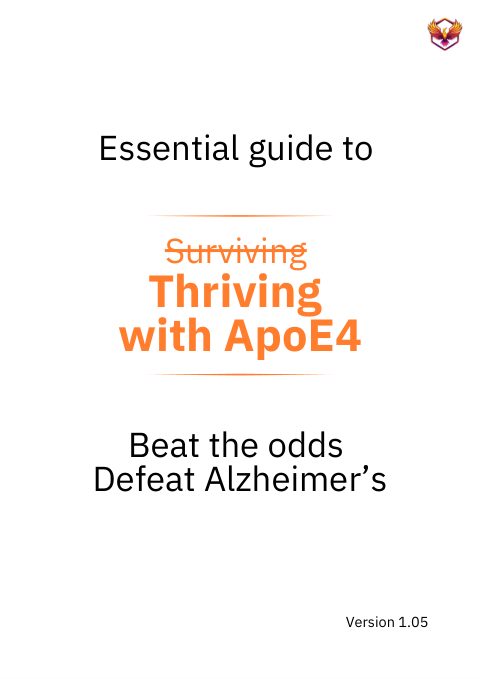
Whether you just discovered you carry APOE4 or you’ve known for decades, The Essential Guide to Thriving with APOE4 gives you the no-regret moves that matter most, grounded in double-blind trials and meta-analyses, not influencer hype.
The PDF lands in your inbox in seconds. No spam, only the APOE4 research you’d actually want to hear about.
60+
Double-blind trials & meta-analyses first. Animal models only where no human data exists. 60+ references.
Beat the odds
Understanding APOE4
Once you understand the root cause, the solutions become obvious.
APOE4 drives risk through a handful of mechanisms. Every recommendation in the guide targets one of them directly.
- 01
Impaired lipid transport
APOE4 inefficiently delivers cholesterol to neurons, causing membrane instability.
- 02
Disrupted DHA transport
Less DHA reaches the brain, affecting neuronal repair and synaptic health.
- 03
Chronic neuroinflammation
Persistent inflammatory activation damages neurons and accelerates decline.
- 04
Impaired glucose metabolism
Reduced glucose uptake and brain insulin resistance starve neurons of fuel.
- 05
Mitochondrial dysfunction
Oxidative stress and poor energy production raise neuron vulnerability.
- 06
Compromised blood-brain barrier
A leaky barrier lets toxins in and impairs nutrient supply to the brain.
What’s inside
The interventions that move the needle.
High-impact, no-regret moves: each with the why, the how, and the science behind it.
- 01
Nutrition
Mediterranean, omega-3-rich, low-glycemic and low-sat-fat keto: do’s and don’ts.
- 02
Harmful habits
Why smoking and alcohol hit APOE4 brains harder, and how to step away.
- 03
Stress management
Why chronic stress is especially dangerous for carriers, and what calms it.
- 04
Sports & movement
Zone 2, HIIT and strength training: dose, examples and weekly targets.
- 05
Sleep optimization
Non-negotiable for carriers. Hygiene, REM, and treating sleep apnea.
- 06
Supplements & toxins
A core APOE4 stack, advanced/emerging options, and the toxins to avoid.
Risk is real, and modifiable
Higher risk. Not a verdict.
The numbers are sobering, but they’re levers, not destiny. Lifestyle and environment shift outcomes dramatically. And that’s exactly what this guide is for.
- 2–4×Alzheimer’s risk · e3/e4
- 8–15×Alzheimer’s risk · e4/e4
- 9evidence-based pillars
- 60+studies referenced
It’s an exciting time to know about this gene. We’ve got a lot of reasons to be optimistic. Room for optimism.Dr. Gertrude Behan · APOE4 · Retired Physician · Queensland, AustraliaWatch Gertrude’s full story

I had two choices: accept my fate, or fight to rewrite it.
“During my residency in France’s top geriatric units, I saw the brutal realities of Alzheimer’s firsthand. Then I discovered I carry two copies of the APOE4 gene. Leveraging my background as a Doctor of Pharmacy (including work on Alzheimer’s drugs in big pharma and at hospitals), I founded the Phoenix Community to choose agency over fate. This guide is where that starts.”
Dr. Kevin Tran · Doctor of Pharmacy · APOE4/4 carrier · Founder
Read my storyThe missing pieces
Knowing what to do is only half of it.
A guide has to stay general. The rest (making it personal, validating what works, and staying consistent) is what the Phoenix Community is built for.
You are unique
Your genetics, environment and habits decide what actually works for you. Matched pods pair you with carriers who share your profile.
Validate each intervention
Structured experimentation lets you measure what moves your numbers, instead of guessing and hoping.
Consistency needs community
Even a perfect protocol fails if you can’t stick to it. Accountability pods and people who get it keep you going.
Keep up with the science
APOE4 research moves fast. Curated research updates and early clinical-trial alerts keep your plan current.
Common questions
Frequently asked questions.
What mechanisms does APOE4 actually affect?
Six: impaired lipid transport to neurons, disrupted DHA transport to the brain, chronic neuroinflammation, impaired glucose metabolism, mitochondrial dysfunction, and a more permeable blood-brain barrier. Every recommendation in the guide targets one of these directly.
Does having APOE4 mean I will get Alzheimer's?
No. Risk is elevated (roughly 2-4x with one copy, 8-15x with two), but it is a risk factor, not a diagnosis. Lifestyle and environment shift outcomes dramatically, which is what the guide's interventions target.
What topics does the guide cover?
Nine evidence-based pillars: nutrition (Mediterranean, omega-3-rich, low-glycemic, low-sat-fat keto), harmful habits, stress management, exercise (Zone 2, HIIT, strength), sleep optimization, and supplements and toxins to avoid.
How is the evidence graded?
The guide prioritizes double-blind trials and meta-analyses first, and only cites animal models where no human data exists yet, with 60+ references throughout.
Is this guide medical advice?
No. It is educational and grounded in published research, not medical advice, and there is no one-size-fits-all solution. Always discuss changes to your protocol with a qualified healthcare provider.
Get the free guide
Beat the odds. Defeat Alzheimer’s.
Enter your email to download The Essential Guide to Thriving with APOE4 instantly, plus the research and member experiments we publish each week.
Straight to your inbox. No spam, only APOE4 research worth your time, and you can leave with one click.
This guide is educational and grounded in published research. It is not medical advice and there is no one-size-fits-all solution. Always discuss changes to your protocol with a qualified healthcare provider.
Start here
More free guides.
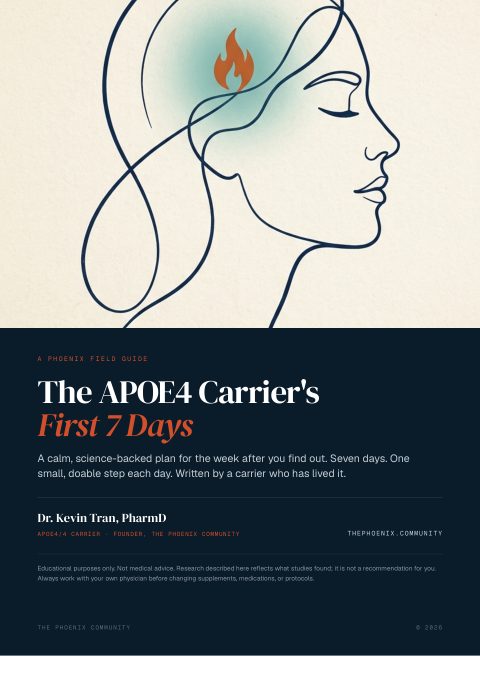 The APOE4 Carrier’s First 7 DaysA calm starting point for the questions after your result.
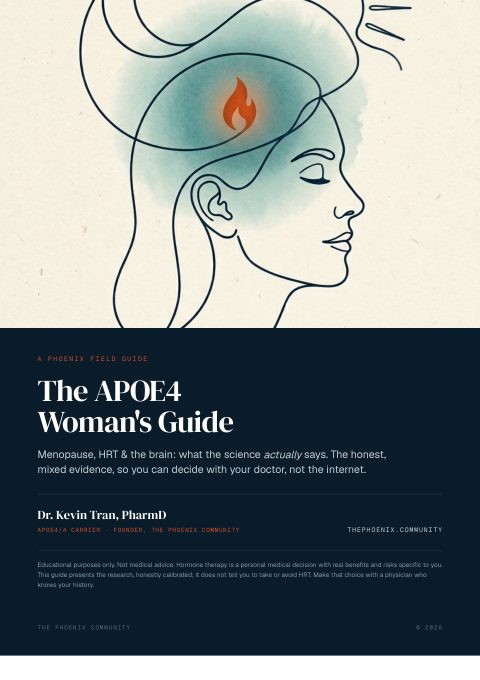 The APOE4 Woman’s GuideExplore menopause, hormone therapy and questions the evidence has not settled.
Phoenix APOE4 ResearchClinical trial engineAPOE4 doctor directory